

How Your Diet and Meal Timing Can Help You Sleep Better?
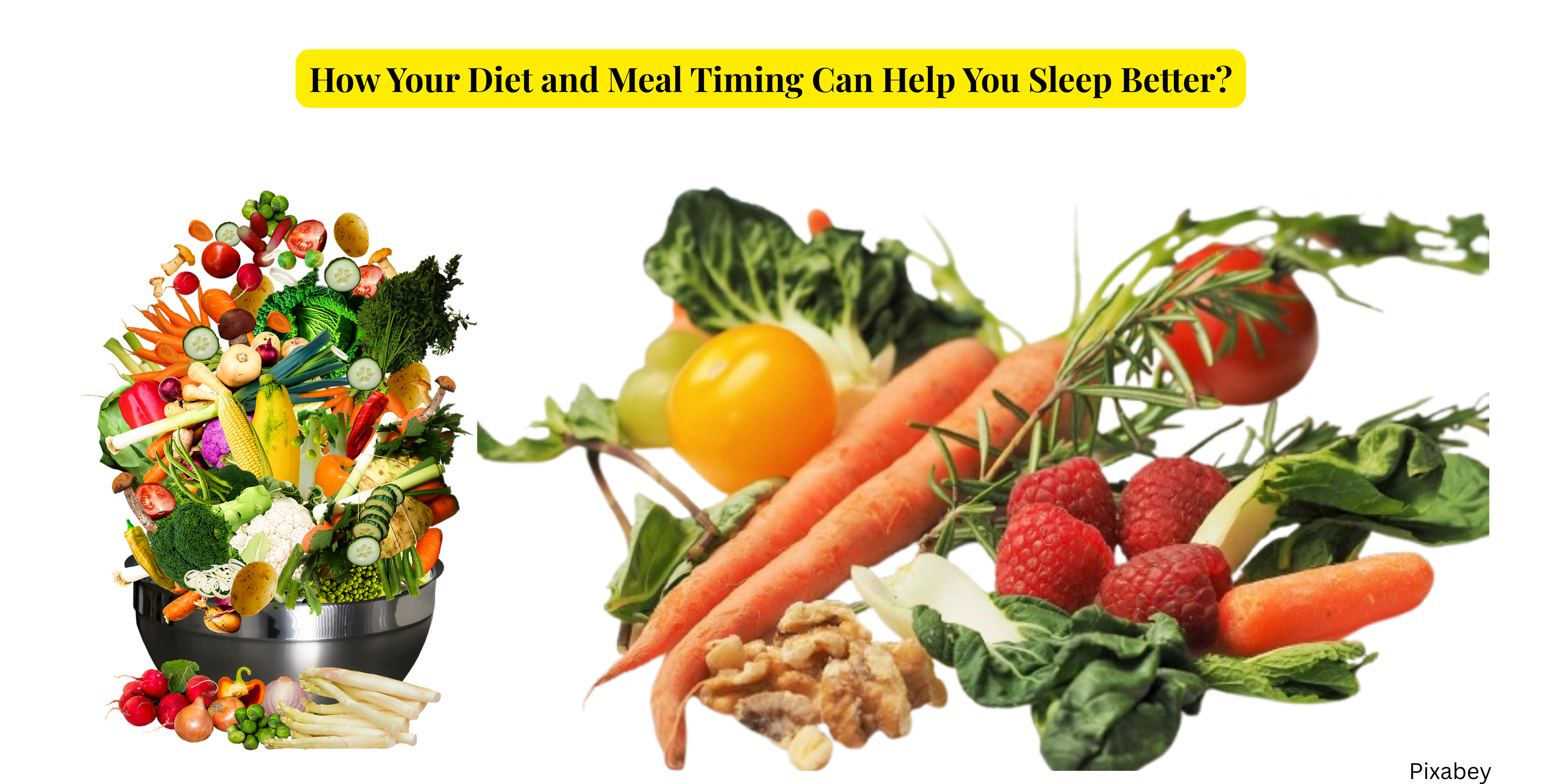
Going to bed on a full stomach rarely results in a restful night’s sleep, as most of us already know from personal experience. Heavy meals consumed late at night frequently result in tossing and turning and waking up exhausted the next morning. The key question, though, is whether sleep is solely dependent on when we eat or if our daily diet has a greater impact. According to science, your total diet has a significant impact on how well you sleep. How Your Diet and Meal Timing Can Help You Sleep Better? This question highlights the important link between what you eat, when you eat, and how these habits can directly influence your sleep quality and overall rest.
Why Do Late-Night Heavy Meals Ruin Sleep?
When we consume a large meal late at night, our bodies are occupied with digestion rather than unwinding. Energy is needed for digestion, and this additional work can interfere with our regular sleep schedule. This explains why sleep feels lighter and mornings feel draining after late dinners, especially those that are hot or greasy. Thus, eating late has an impact on sleep, but it’s not the whole picture.
Are There Foods That Actually Improve Sleep?
You could have heard recommendations such as
- Before going to bed, warm milk
- Cherry juice with a tart taste
- At night, kiwifruit
These foods may help enhance the quality of sleep, according to some research. The explanation is straightforward: they contain melatonin or tryptophan, both of which are connected to the control of sleep. Tryptophan is abundant in milk and aids in the body’s production of melatonin, sometimes referred to as the sleep hormone. The reality is that a poor diet during the day cannot be compensated for by one decent meal before bed. It is evident from nutrition experts that nutrients that promote sleep take time to take effect. Over time, your body requires steady sustenance.
It’s Not One Meal, It’s Your Whole Day’s Diet
People who generally consume a healthy diet tend to sleep better, according to research.
Typically, a sleep-friendly diet consists of:
- An abundance of fruits and vegetables
- Wholegrains
- Dairy goods
- Fish and other lean proteins
People who increased their regular consumption of fruits and vegetables for just a few months reported discernible improvements in sleep quality, according to a comprehensive study. It was easier to fall asleep, and sleep was more revitalising.
Why Is Tryptophan So Important for Sleep?
Tryptophan is essential for sleep because it helps the body produce serotonin, which is then converted into melatonin, the hormone that regulates our sleep–wake cycle. Melatonin levels can decrease when we don’t get enough tryptophan from our diet, which makes it more difficult to fall and stay asleep. Eating foods high in tryptophan and carbohydrates with high fibre content facilitates the efficient delivery of tryptophan to the brain, promoting deeper, higher-quality sleep.
How Plant-Based Foods Support Better Sleep?
Diets high in plants do more than only supply nutrients:
- They lessen the body’s inflammation.
- They enhance intestinal health.
- They promote the link between the gut and the brain.
Sleep, happiness, and stress are all influenced by a healthy gut. Because of this, diets rich in fiber are frequently associated with deeper, more restful sleep.
Magnesium: The Quiet Sleep Supporter
Magnesium is another nutrient strongly connected to sleep quality. It helps calm the nervous system by reducing cortisol, the stress hormone.
Some excellent sources of magnesium are:
- Leafy green veggies, such as spinach
- Seeds and nuts
- Legumes
- Wholegrains
According to studies, consuming more magnesium can enhance both REM and deep sleep.
Does Meal Timing Matter Too?
The timing of meals is important. Eating too close to bedtime causes our bodies to focus on digesting food rather than getting ready for sleep, which can slow down the rate at which we fall asleep. Eating earlier in the evening makes it easier for the brain to distinguish between eating during the day and sleeping at night. Our internal body clock is supported by this well-defined routine, which facilitates relaxation, speeds up sleep, and improves the quality of our sleep.

Key Points to Remember
Good sleep doesn’t come from one bedtime snack or drink. It comes from daily habits built around food, timing, and routine.
- Eat more fruits and vegetables
- Choose grains and fibre-rich foods
- Get enough magnesium naturally
- Avoid heavy late-night meals
- Maintain consistent eating and sleeping times
Conclusion
One magical snack or beverage before bed is not the key to improved sleep. It’s about maintaining a regular schedule, having adequate nutrients like magnesium and tryptophan, and what you consume during the day. Avoiding hefty late-night meals, scheduling your meals correctly, and consuming more fruits, vegetables, whole grains, and lean proteins can all have a significant impact. Your mornings will appreciate it if you make small, daily decisions that result in deeper, more restorative sleep.
FAQ
Yes,better sleep can be supported by foods high in tryptophan, melatonin, magnesium, and fiber, such as fruits, vegetables, whole grains, nuts, seeds, dairy, and fish.
Eating large meals right before bed can make it more difficult to fall asleep since your body is preoccupied with digestion rather than unwinding.To give your body time to relax, try to complete your dinner a few hours before going to bed.
The timing of meals is crucial.Eating earlier in the evening supports your body’s natural clock by assisting your brain in differentiating between day and night.A nutritious diet and appropriate time can significantly improve the quality of your sleep.
Related Posts


Stay Informed With the Latest & Most Important News
Previous Post
Next Post



- Business
 5
5 - Cricket5
- Department for Education49
- Departments3
- Driving and Transport
 53
53 - Education45
- Finance6
- Football13
- Golf3
- Government
 108
108 - Guides1
- Health4
- Health
 5
5 - International Politics9
- Law and Justice31
- Money and Tax23
- National Politics4
- News67
- Politics6
- Sports38
- Technology5
- Tennis3
- Transportation4
- Uncategorized4
- Visa
 17
17 - Visas and Immigration
 24
24 - Weather1